How to Play
Secrets of the Round Table is a hidden-identity deduction game for 5–10 players. Everyone secretly gets a role: the good side tries to complete quests, while the evil side hides among them and sabotages from within.
Read this page and you'll be ready for your first game.
1Goal

Good (Loyal Servants of Arthur)
The larger team, but they don't know who is evil. They must succeed at 3 quests and keep Merlin hidden until the end.
Evil (Minions of Mordred)
The smaller team, but they know each other. They win if 3 quests fail, or by assassinating Merlin at the end.
2How a round works
Every quest follows these steps:
The leader picks a team
The current leader (marked with a crown) chooses the number of players this quest needs, and may include themself. Everyone can discuss in chat or voice first.

Leader
Everyone votes openly
All players (including the leader) vote to approve or reject the team. It passes with a strict majority; a tie counts as rejected. Votes are public, so use them for deduction.
If the team is rejected, leadership passes to the next player, who proposes a new team.

Approve
Reject
Team members play quest cards in secret
Once approved, only team members secretly play a card. Good players can only play Success; evil players may play Success or Fail.

Success
Fail
Reveal the result
Only the number of Fail cards is revealed — never who played them. A single Fail makes the quest fail (except the 4th quest with 7+ players, which needs 2). Leadership then passes on and the next quest begins.
3Players & quests
The number of evil players and the team size for each quest depend on the player count:
| Players | 5 | 6 | 7 | 8 | 9 | 10 |
|---|---|---|---|---|---|---|
| Good | 3 | 4 | 4 | 5 | 6 | 6 |
| Evil | 2 | 2 | 3 | 3 | 3 | 4 |
| Quest 1 | 2 | 2 | 2 | 3 | 3 | 3 |
| Quest 2 | 3 | 3 | 3 | 4 | 4 | 4 |
| Quest 3 | 2 | 4 | 3 | 4 | 4 | 4 |
| Quest 4 | 3 | 3 | 4* | 5* | 5* | 5* |
| Quest 5 | 3 | 4 | 4 | 5 | 5 | 5 |
* With 7+ players, the 4th quest needs 2 Fail cards to fail. Its circle on the game board is marked "2 fails".
4Roles
Merlin and the Assassin are always in the game. The host decides which other special roles to add; everyone else is a regular Loyal Servant or Minion.
Good

Merlin
AlwaysAbility: knows who is evil (except Mordred).
The most powerful good role, but must stay subtle: if the Assassin identifies you at the end, good loses. Guide others with hints.

Percival
Optional5+ playersAbility: sees Merlin and Morgana, but doesn't know which is the real Merlin.
Watch both to tell them apart, then shield the real Merlin by acting like Merlin yourself.
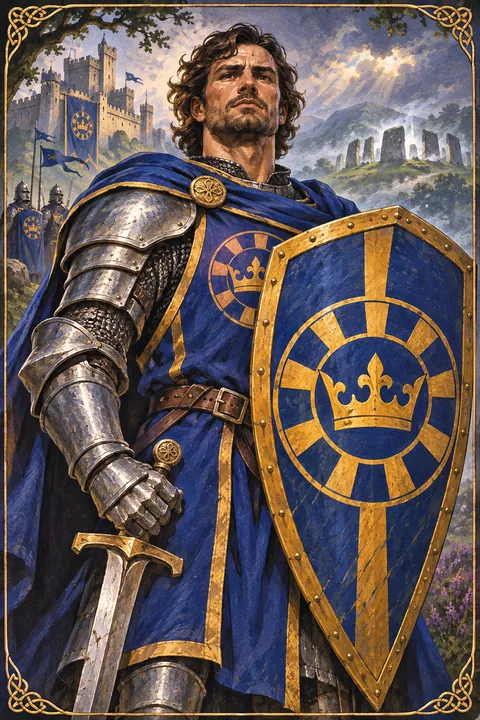
Loyal Servant of Arthur
BasicAbility: none — you don't know anyone's identity.
Use votes, quest results and discussion to find the evil players. You're the majority, so your judgment decides the game.
Evil
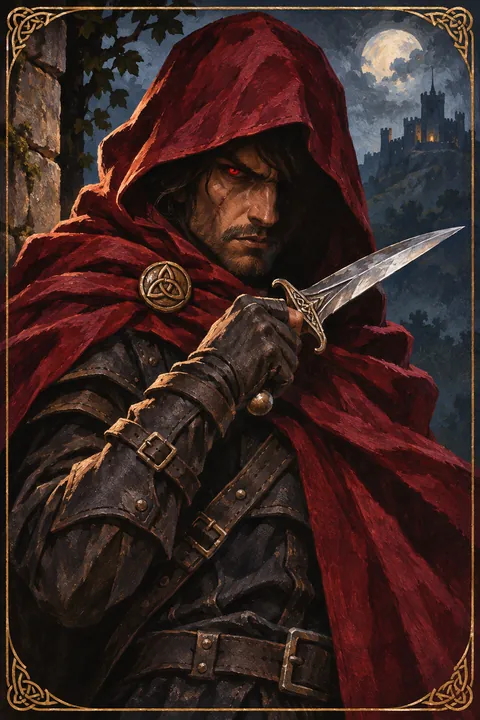
Assassin
AlwaysAbility: knows the other evil players. If good completes 3 quests, you may assassinate one player — hit Merlin and evil wins.
Watch carefully all game: who seems to "know too much"?

Morgana
Optional5+ playersAbility: appears as Merlin to Percival.
Pose as Merlin to fool Percival. Only useful when Percival is also in the game.
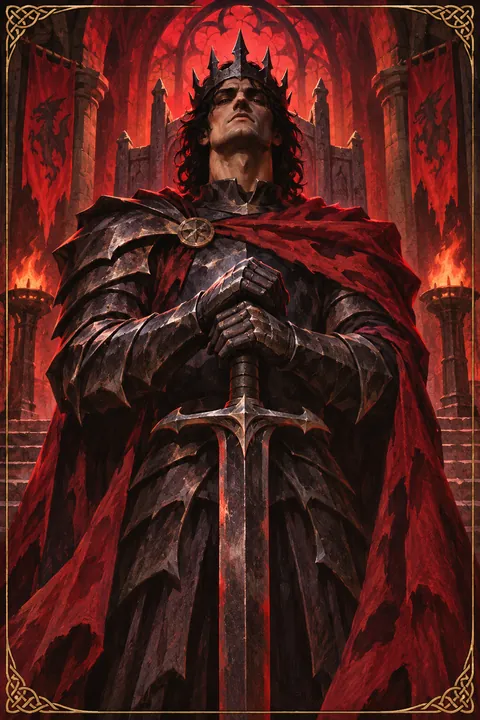
Mordred
Optional7+ playersAbility: hidden from Merlin.
Not even Merlin knows you're evil, so you can boldly join quest teams.
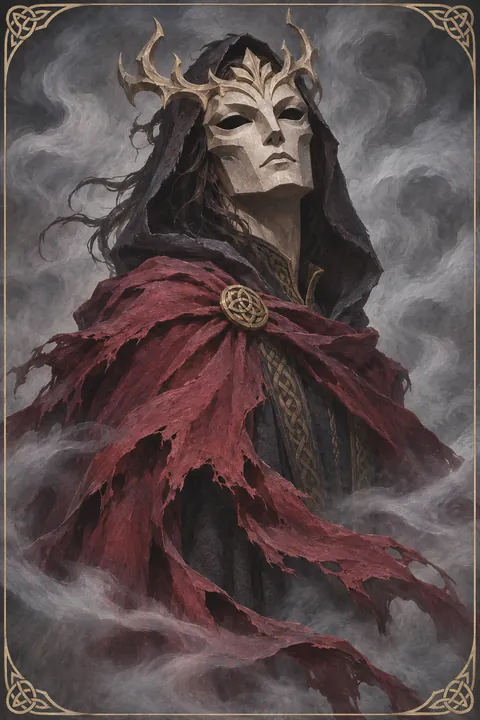
Oberon
Optional7+ playersAbility: (really a handicap) you don't know your allies and they don't know you — but Merlin can see you.
A lone wolf who has to work out who the other evil players are from the quest results.
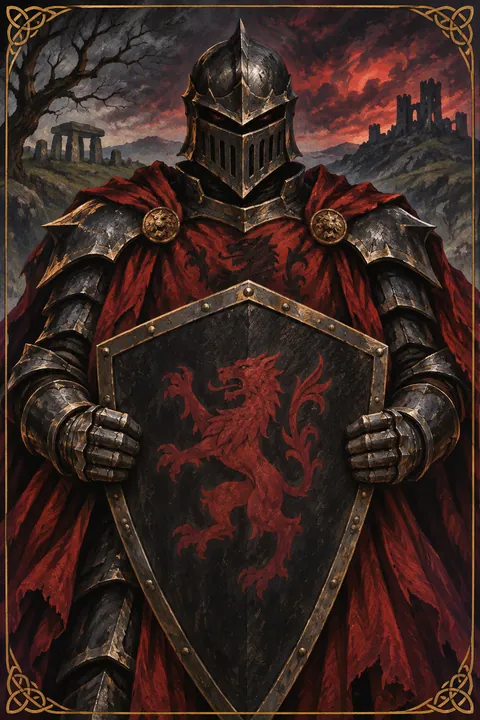
Minion of Mordred
BasicAbility: knows the other evil players (except Oberon).
Get onto teams, play Fail at the right moment, and steer everyone's deductions the wrong way.
Recommended setups
| Players | Suggested roles (besides Merlin & Assassin) | Notes |
|---|---|---|
| 5–6 | Percival + Morgana | The standard beginner game. For a very first game you can use just Merlin and the Assassin |
| 7 | Percival + Morgana + (Oberon or Mordred) + Lady of the Lake | Evil has 3 players, so a third evil role fits |
| 8–9 | Percival + Morgana + Mordred + Lady of the Lake | Merlin can't see Mordred, which raises the difficulty |
| 10 | Percival + Morgana + Mordred + Oberon + Lady of the Lake | Evil has 4 players; every special role is in |
Add Percival and Morgana together: Morgana alone does nothing, and Percival alone can spot Merlin directly, making good too strong. You can't pick more evil roles than there are evil players — the game will warn you.
5Who sees whom
At the start, each role sees different information. This table is the heart of the game:
| I am \ I can see | Evil players | Merlin | Notes |
|---|---|---|---|
| Merlin | ✔ (except Mordred) | — | Can see Oberon |
| Percival | ✘ | ✔ mixed with Morgana | Sees two players, can't tell which is real |
| Loyal Servant | ✘ | ✘ | Sees nothing |
| Assassin / Morgana / Mordred / Minion | ✔ allies (except Oberon) | ✘ | Knows who the allies are, but not their roles |
| Oberon | ✘ | ✘ | Completely alone |
6Special rules
Assassinating Merlin
When good completes 3 quests, all evil players are revealed. The Assassin, after talking with the other evil players, picks one good player. Hit Merlin → evil wins; miss → good wins.

Lady of the Lake (optional, 7+ players recommended)
After quests 2, 3 and 4, the holder may check one player's loyalty (good or evil only, not their role), then passes the Lady to that player. Anyone who has held the Lady can't be checked. Only you see the result — whether you share it, truthfully or not, is up to you.
Five rejections in a row
If five teams in a row are rejected for the same quest, evil wins immediately. The red "Rejections" dots on screen keep track.
Quest 4 needs 2 fails
With 7+ players, the 4th quest only fails with 2 Fail cards. With a single Fail it still succeeds — but everyone learns there's evil on that team.
7Example (5 players)
Players: Alex, Ben, Chloe, Dan and Emma. Two of them are evil. Quest 1 needs 2 players.
- Leader Alex picks "Alex, Ben". The vote is 3 approve, 2 reject → approved.
- They play their cards: 0 fails → quest succeeds. That doesn't prove both are good — evil players sometimes play Success early to earn trust.
- Leadership passes to Ben. Quest 2 needs 3 players; he picks "Ben, Alex, Dan". Chloe votes reject, saying Dan seems suspicious. The vote is 3–2 and the team goes.
- Result: 1 fail → quest fails. Alex and Ben already passed a quest together, so suspicion falls on Dan…
- Chloe suspected Dan from the start — she might be Merlin. If good wins 3 quests, the Assassin will likely target her!
Key questions: who was on the failed quests? Who keeps approving suspicious teams? Who seems to already know the answer?
8Beginner tips
- Study the vote history — evil players often approve each other.
- When a quest fails, note who was on it and cross-check.
- Don't casually approve a team with a suspicious player.
- As Merlin, stay low-key with your hints; as Percival, you can pretend to be Merlin to protect the real one.
- Don't fail every quest — sometimes play Success to build trust.
- If two evil players are on the same quest, two Fails can expose you. Agree on who fails.
- Join in the deduction and steer suspicion onto good players.
- Watch for whoever "knows too much" — that's probably Merlin.
Endings


9Using the site
Rooms
- Quick Join: puts you into a public room in your language that's filling up, or opens one for you.
- Open public room: your room appears in the "Online rooms" list on the home page so online players can join.
- Private room: only people with the 4-character room code or invite link can join.
- Each room is marked as a Chinese room or English room so players know which language to chat in. The host can change it in the room before the game starts.
- In every room, the host taps "Start game" when everyone is there — games never start automatically.
During the game
- Voice: tap "Join voice" in the top bar to talk with your room. You can mute anytime; whoever is speaking gets a green glow.
- Chat: discuss by text if you're not on voice. System messages are logged here too.
- Vote history: every proposal's leader, team, and who approved or rejected is recorded; approved proposals also show the quest result.
- Quest records: tap a finished quest badge to see that round's leader, team and number of fail cards (not who played them).
- Turn timer: always on in public rooms. When time runs out, the game acts for idle players — filling the team, counting a missing vote as approve, and playing Success. In private rooms the host decides.
- Reconnecting: if you close the page by accident, reopen it in the same browser to return to your seat.
- Language: switch between 中文 and EN with the button in the top bar at any time.
- Avatars & stickers: tap your avatar in the room (before a game starts or after it ends) to change it; use the button left of the chat box to send stickers.
- Music & sound: toggle music and sound effects separately from the gear menu.
- On phones: switch between Game and Chat at the bottom; vote and quest buttons stay pinned to the bottom, and your phone vibrates when it's your turn.
10About this game
A tribute to the original
Secrets of the Round Table is a tribute to, and its gameplay is based on, the board game The Resistance: Avalon, designed by Don Eskridge and published by Indie Boards & Cards. Thank you to the original for such a great deduction game.
This is an independent, unofficial project. It is not affiliated with, authorized or endorsed by the designer or publisher. If you enjoy games like this, please buy the original board game and play it face to face with friends to support its creators.
FAQ
How is this related to Avalon?
The gameplay is based on the board game The Resistance: Avalon, and the rules are largely the same, so if you have played it you can jump right in. Secrets of the Round Table is an independent, unofficial online project; its name, interface, artwork and written guides were made separately.
Where do Merlin, Mordred and the other characters come from?
They come from the centuries-old legends of King Arthur, which don't belong to any one game.
Does it cost anything or need a download?
No. It's free with no ads, and runs right in your browser. Google sign-in is optional and only used to save your stats and achievements.
Credits & licenses
Game by Gordon Zhan
Music
- Folk Round — Kevin MacLeod (incompetech.com). Original. Licensed under CC BY 4.0. Volume adjusted and re-encoded.
- Darkest Child — Kevin MacLeod (incompetech.com). Original. Licensed under CC BY 4.0. Volume adjusted and re-encoded.
- Long Note Three — Kevin MacLeod (incompetech.com). Original. Licensed under CC BY 4.0. Volume adjusted and re-encoded.
Sound effects
Kenney RPG Audio and Interface Sounds, licensed under CC0. Volume adjusted and converted to MP3.
Music and sound effects can be toggled separately from the gear menu in the top-right corner of the game.